
Data Center Security Fundamentals
IHK Certificate from the Hanau-Gelnhausen-Schlüchtern Chamber of Industry and Commerce
Security for the infrastructure on which our digital world is based.
Data centers are among the most critical infrastructures of our time. Ensuring their security requires more than traditional security guarding: Security personnel must understand technical environments, master complex access procedures, identify risks, and be able to act confidently in critical situations.
The Data Center Security Fundamentals – Certification (DCSG) program teaches exactly these skills.
Practical. Tailored to data centers. Designed to meet the requirements of modern data center environments.
Your Benefits at a Glance
- Specialized Certification in Data Center Security
- Practical Knowledge for Physical Security and Operations
- Safe Management of Access, Escalation, and Emergency Procedures
- Alignment with relevant standards and best practices
- Also available as in-house training for entire security teams
Course Details
Duration
Five days of training
50 class periods
Eight specialized modules with theoretical and practical learning content
Certifications
IHK certificate upon successful completion of the course
Pond Academy Certificate of Participation
Target Audience
Security personnel at data centers
Security Officers and Control Room Staff
Shift and Team Leaders
Security service providers with data center contracts
Data Center Providers and Operators
Requirements
No specific prior knowledge of data center security is required.
Any existing security-related qualifications or practical experience in security services are a plus.
A basic interest in technical and operational contexts is recommended.
- FOR BUSINESSES & SECURITY TEAMS
In-House Training for Your Security Team
Train multiple employees or your entire security team at the same time and establish a uniform training standard.
The course content and practical components can be tailored specifically to the conditions at your location as well as to existing security, access, and escalation procedures.
- Right at their location
- Uniform Standard
- Customization
- Flexible Scheduling
Interested in in-house training?
We would be happy to discuss with you how the training program can be tailored to your company's needs.
Course Content Overview
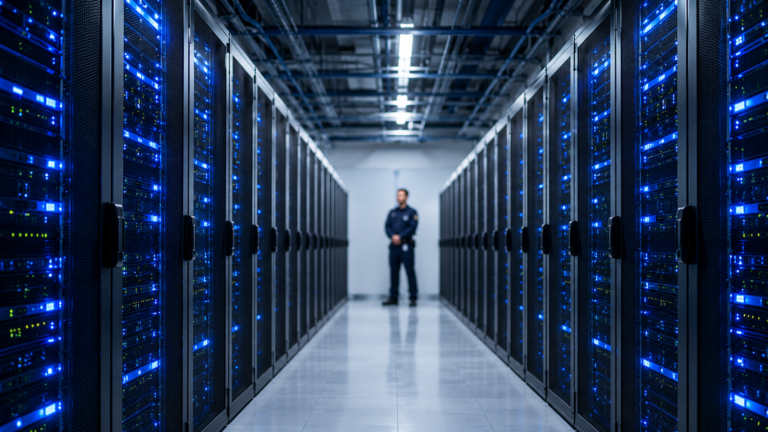
01 | Fundamentals of Data Center Infrastructure
Understand the architecture, security zones, and central technical systems of modern data centers.
Learn more
Understanding the Data Center
How does a modern data center work, and which areas are particularly relevant for security personnel?
Participants will learn about the layout and security zones of modern data centers. These include, among other things, the perimeter, reception area, data halls, electrical rooms, chiller yards, and diesel generators.
The course also covers key technical systems such as power supply, UPS, cooling, fire alarm, and fire suppression systems, as well as basic occupational health and safety requirements.
Why is this module important?
Security personnel can only protect what they understand.
Anyone working in a data center must be able to identify which areas are critical, what technical hazards exist, and why certain rooms, systems, and processes require special protection.
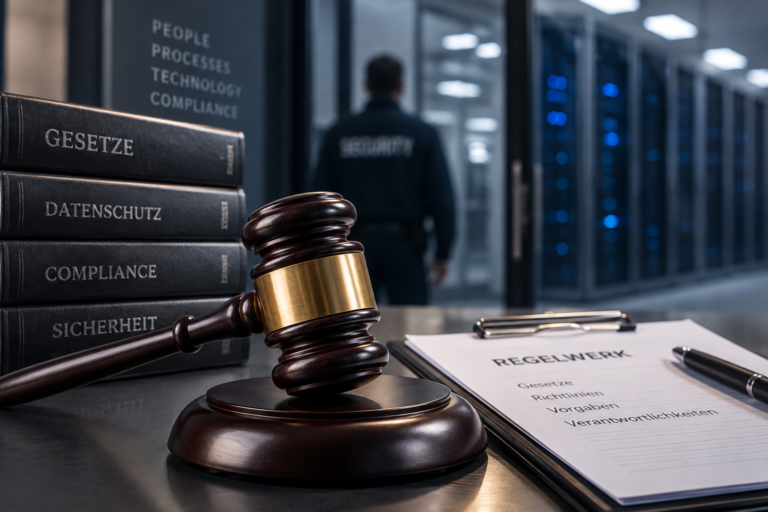
02 | Legal Foundations of Safety Work
Act in compliance with the law, understand your authority, and make transparent decisions in day-to-day security operations.
Learn more
Act Safely and Know Your Limits
Security personnel make decisions every day that may have legal consequences.
Among other topics, the module covers Section 34a of the German Trade Regulation Act (GewO), the Security Services Regulation (BewachV), data protection, property rights, self-defense, states of necessity, liability, and reporting requirements, as well as relevant requirements in the data center environment.
Why is this module important?
Security personnel must not only know what to do, but also what they are allowed to do.
Especially when it comes to denying access, conducting checks, handling personal data, and dealing with security incidents, decisions must be made in a legally sound and transparent manner.
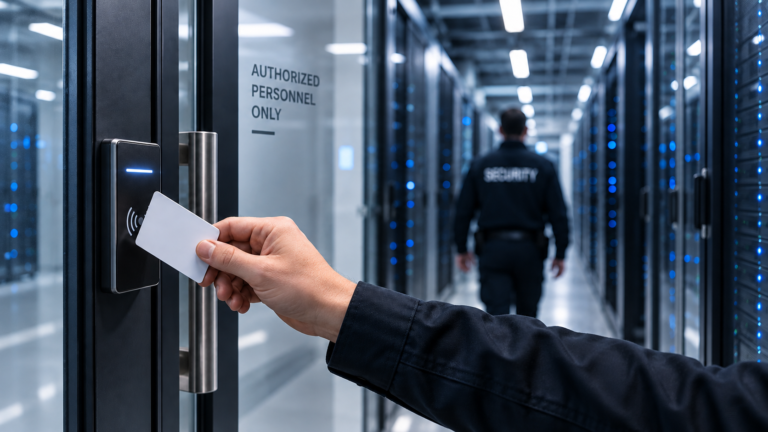
03 | Access and Access Control Management
Securely verify identity, authorization, and the target area, and reliably implement access processes.
Learn more
The right person. In the right place. At the right time.
Access management is one of the key aspects of a data center's physical security.
Participants will learn about security zones and multi-layer security concepts, as well as access procedures for employees, visitors, suppliers, and technicians.
The report also covers authorization processes for sensitive areas, as well as digital and biometric access systems.
Why is this module important?
Just because someone has a valid ID doesn't mean they're allowed access everywhere.
Security personnel must be able to cross-reference identity, authorization, destination area, and operational guidelines, and identify any discrepancies.
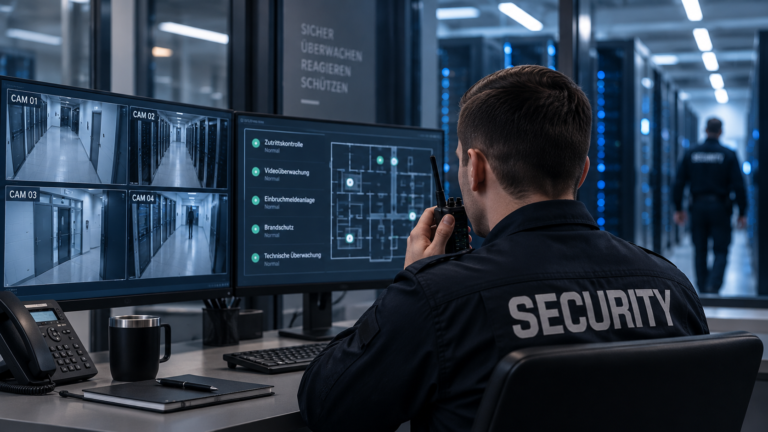
04 | Physical Security Measures and Technical Systems
Understand technical and organizational security measures, apply them correctly, and evaluate how they work together.
Learn more
Understand the technology. Use protective measures correctly.
Modern data centers use multiple coordinated layers of security.
Among other topics, the module covers perimeter security, video surveillance, alarm systems, barriers, lighting, access controls, as well as functional testing and documentation.
Participants will also learn to consider technical and organizational security measures together and to evaluate their effectiveness.
Why is this module important?
A camera alone cannot prevent a security incident.
The key lies in the interplay between technology, processes, and people. Security personnel must understand the function of a system and recognize when a technical or organizational vulnerability arises.
05 | Safety Processes and Operations
Reliably implement safety requirements into day-to-day operations and reliably identify deviations.
Learn more
Security in Day-to-Day Data Center Operations
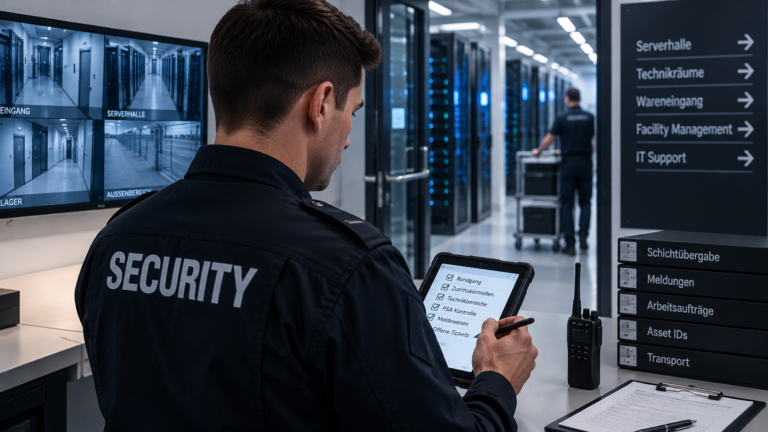
This module applies safety requirements to day-to-day operations.
The following topics are covered: shift handoffs, reporting, documentation, personnel and material checks, work orders, tickets, asset IDs, transportation processes, PPE checks, patrols, and escalation procedures.
Collaboration with Facility Management, IT, Safety, and other departments is also part of the module.
Why is this module important?
Most security processes fail not because of a lack of technology, but because of inconsistent implementation.
Security personnel must reliably carry out procedures, identify deviations, document them accurately, and know when and to whom to escalate issues.
06 | Emergency, Crisis, and Evacuation Management
Respond in a structured manner in critical situations, understand your responsibilities, and minimize the impact on operations.
Learn more
Wenn aus Routine plötzlich ein Incident wird.
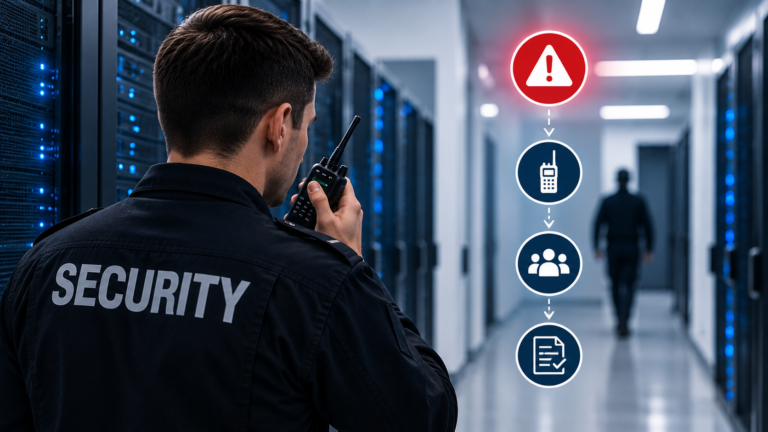
A fire, power outage, or technical malfunction may require a coordinated response within a matter of seconds.
Participants will learn the basics of emergency management, alert and evacuation procedures, and roles and responsibilities.
Practical response procedures, communication, documentation, and follow-up on incidents are also part of the module.
Why is this module important?
In an emergency, there's no time to look for the process first.
Security personnel are often among the first to respond. Clear responsibilities and well-rehearsed procedures help protect people and minimize the impact on operations.
07 | Communication, Behavior, and Ethics
Communicate professionally even under pressure, de-escalate conflicts, and act responsibly.
Learn more
Act professionally, even under pressure.
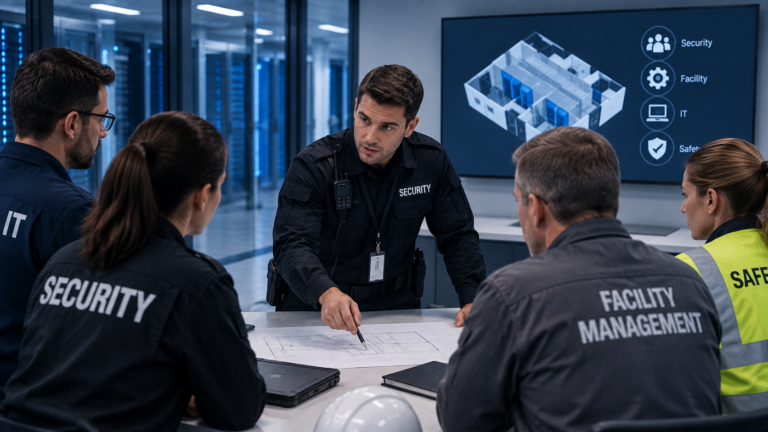
Data centers are international work environments. Security personnel communicate with employees, technicians, suppliers, visitors, management, and emergency responders.
The module covers professional communication, conflict management, de-escalation, stressful situations, cultural differences, as well as ethics, loyalty, confidentiality, and compliance.
Why is this module important?
Security personnel enforce rules on people.
The quality of communication often determines whether a situation is resolved professionally or escalates unnecessarily.
08 | Information Security Interface
Integrate physical and digital security and better identify information risks in day-to-day security operations.
Learn more
Physical Security meets Information Security.
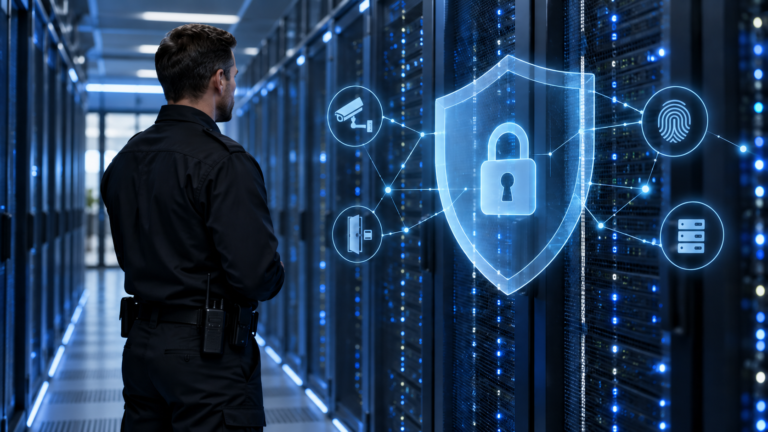
In modern data centers, physical and digital security cannot be considered separately.
Participants will learn the basics of information security and the CIA triad and explore the connection between physical and digital security.
Other topics include data storage media and documents relevant to security, unauthorized devices, social engineering, and physical causes of potential information security breaches.
Why is this module important?
Even the best cybersecurity measures are of little use if physical access to critical systems is not controlled.
Security personnel must understand how their daily actions directly contribute to the protection of information and systems.
Certification by the Chamber of Industry and Commerce (IHK)
Upon successful completion, participants will receive the IHK certificate “Data Center Security Fundamentals.”

Start your continuing education today!
- info@pond-academy.com
- Gewerbepark Birkenhain 19
- 63579 Freigericht
- Contact us
Strong together, safe together.
We are here for you! Feel free to contact us by phone, E-Mail or conveniently via our contact form.